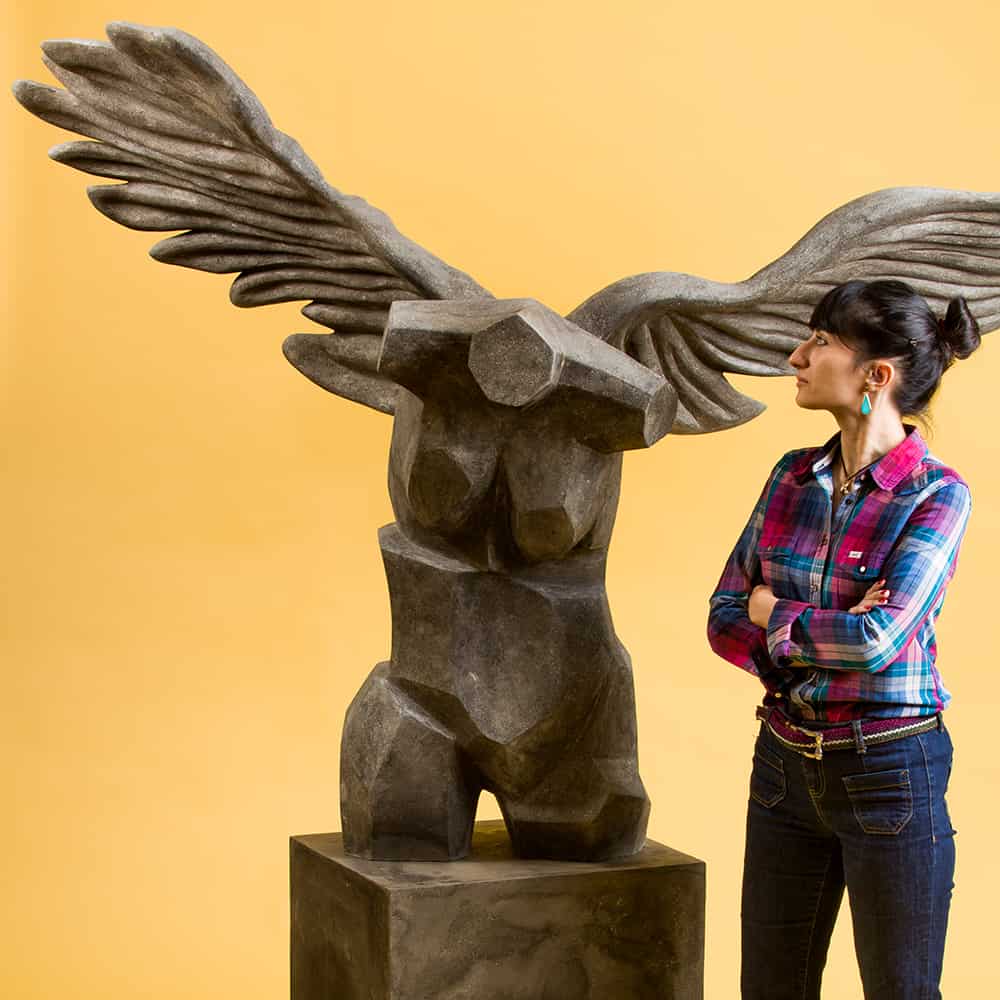
Samothrace’s Fall
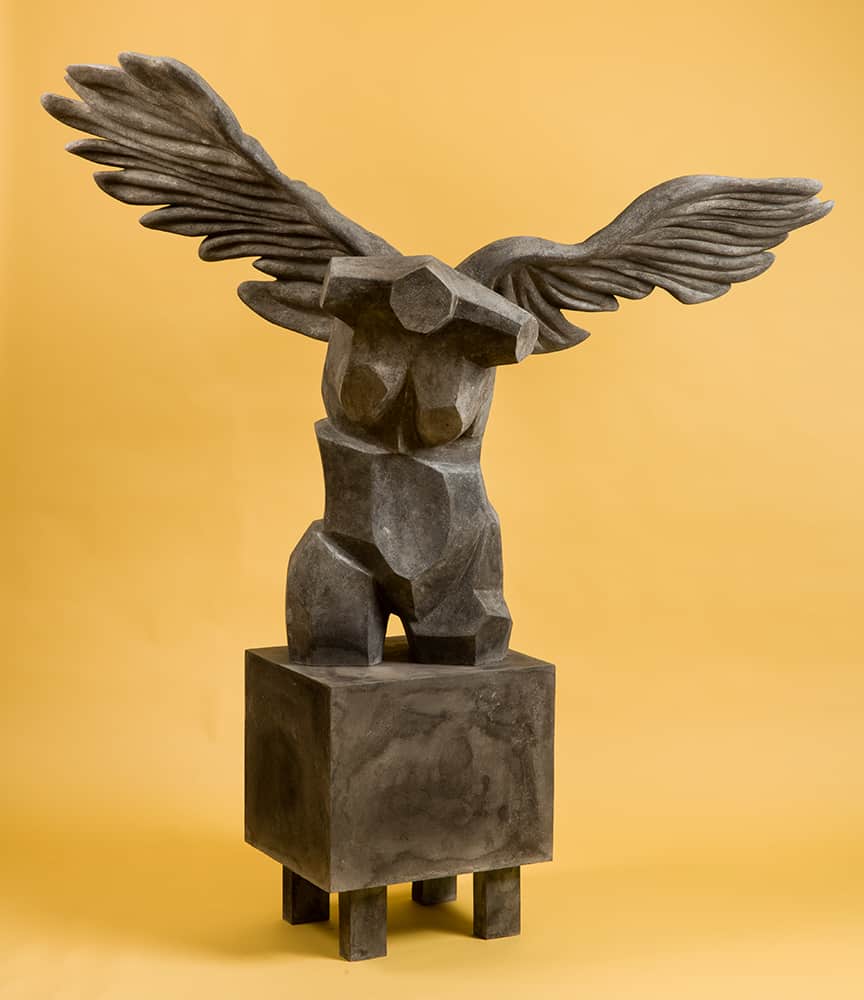
Samothrace’s Fall references the Winged Victory of Samothrace, a sculpture of Nike, the Greek goddess of victory.
The daughter of Pallas and Styx, Nike was widely depicted throughout ancient Greece. Holding a laurel wreath in her hands, she symbolically promised victory. The remains of the sculpture were discovered on April 15, 1863, and have been on permanent display at the Louvre Museum since 1884. Carved from marble, the sculpture portrays Nike descending onto the prow of a warship whose sailors have triumphed in a naval battle. It is estimated to date from around 190 BCE.
When I first encountered the Winged Victory of Samothrace at close range, I was struck not only by its beauty, but also by the role this goddess played in the ancient world: a beautiful figure bearing the promise of victory. Before creating this sculpture, I had explored references to iconic works of art through formal reconstruction. This time, however, I also sought to reconstruct the original work’s meaning.
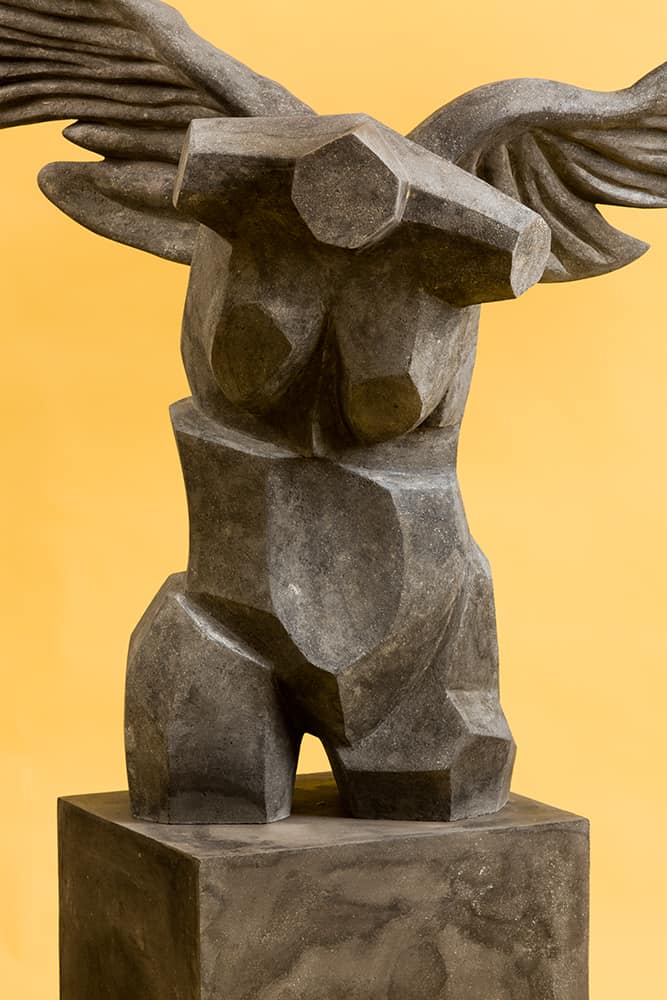
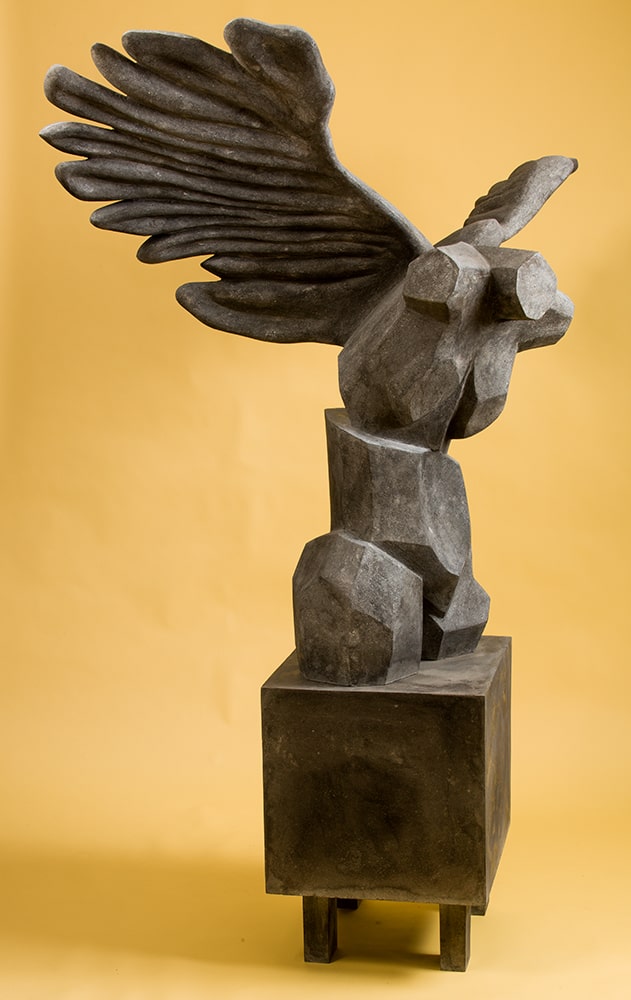
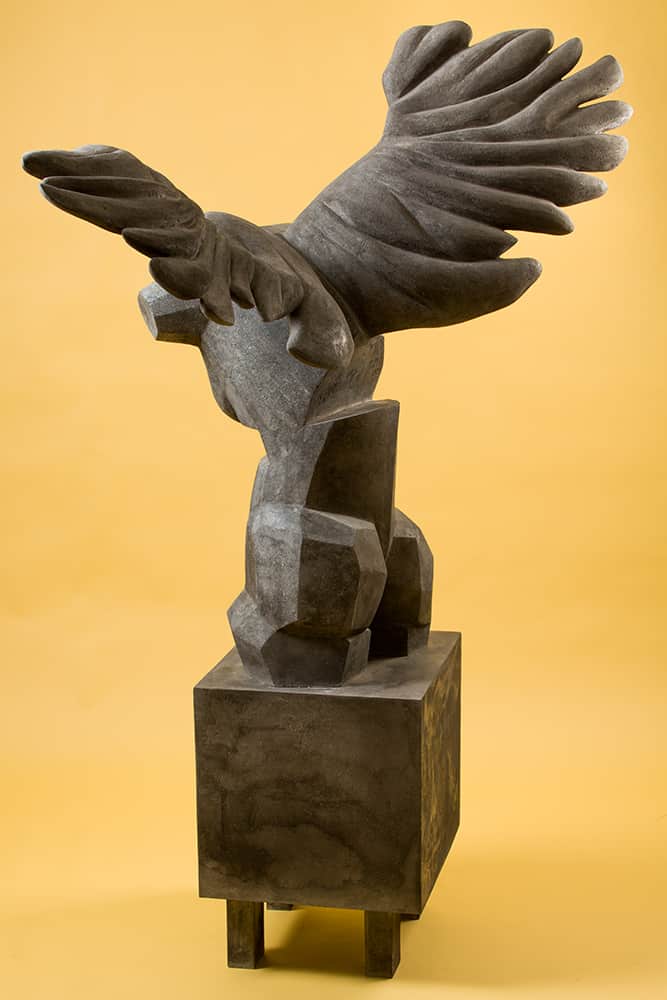
This work is, in essence, an attempt to give tangible form to the goddess of victory in the contemporary world. If she truly existed, in what form would she descend to Earth today? To me, the present-day goddess of victory evokes the image of a mutilated figure—without arms, head, or legs—drained by one battle after another and no longer possessing the strength to promise triumph. She is a woman exhausted by humanity’s endless wars: wars waged by humankind, the self-proclaimed crown of creation, which seeks dominion over the earth, the heavens, and even its own kind, while refusing to tolerate dissent. In such a world, the promise of victory is as futile as the cries of a fish caught in a net. This time, having passed through the flames of countless battles, Nike descends only to rest for a while in a grave.
Over the past several years, environmental well-being has become increasingly important to me. Yet adding environmental concerns to the already long list of challenges and obstacles involved in creating art presented me with a new difficulty. Working with recycled paper was my first step. When I began collecting food and medicine packaging, discarded paper, cigarette packets, and other waste materials, the idea of constructing a large-scale sculpture seemed highly ambitious. Repurposing materials that would otherwise have gone to waste was a significant undertaking, made possible through the support and participation of those around me.
According to the Recycling Association’s website, the ever-increasing production of waste—including paper and cardboard—and its improper disposal not only squander national resources but also contribute to the destruction of natural resources. Studies indicate that recycling just twenty-five percent of the paper and cardboard found in waste could produce one hundred thousand tonnes of recycled paper and save approximately 1.7 million trees each year.
Given the immense scale of environmental destruction and the vast amount of waste we generate, our individual efforts to protect the environment may initially seem insignificant. In One Flew Over the Cuckoo’s Nest, after McMurphy—the film’s central character—fails to rip the hydrotherapy console from the floor, smash the windows, and escape, losing his bet in the process, he turns to the other patients and says something deeply thought-provoking:
“At least I tried.”
Farzaneh Hosseini
سقوط ساموتراس ارجاعی به پیکرهی نیکهی ساموتراس دارد. نیکه، الههی پیروزی، دختر پالاس و استوکس است که تصویر او در یونان باستان بسیار رایج بود. او پیروزی را به شکل نمادین با حلقهی گلی از گیاه برگ بو در دستانش وعده می داد. بقایای پیکرهی نیکهی ساموتراس در تاریخ ۱۵ آوریل سال 1863 کشف شد و از سال 1884 در موزهی لوور به صورت دائمی به نمایش درآمده است. این پیکرهی ساخته شده از سنگ مرمر نمایانگر فرود نیکه برعرشهی یک کشتی جنگی است که ملوانانش در نبردی دریایی پیروز شدهاند. قدمت این پیکره حدود 190 سال پیش از میلاد مسیح تخمین زده شده است.
در اولین برخورد نزدیک با پیکرهی نیکهی ساموتراس، فارغ از زیبایی اثر متوجه نقش این الهه در دنیای باستان شدم. پیکرهای زیبا که نوید بخش پیروزی است. پیش از ساخت این پیکره ارجاع دادن به آثار شاخص دنیای هنر را به شکل بازسازی فرمی تجربه کرده بودم اما این بار محتوای اثر اصلی را نیز دوباره سازی کردم. این تجربه در حقیقت تلاشی برای عینیت بخشی به الههی پیروزی در دنیای معاصر است. اگر الههی پیروزی واقعا وجود خارجی میداشت با چه شکل و ظاهری به زمین میرسید؟ الههی پیروزی امروزین برایم تصویر پیکره ای مثله شده، بی دست و سر و پا را تداعی کرد که در میان نبردهای پی در پی دیگر جانی برای نوید بخشی ندارد. زنی خسته از نبردهای بی پایان آدمی زادگان. اشرف مخلوقاتی که اختیار دار زمین و آسمان و حتی هم نوعان خود است و اختلاف نظر را بر نمیتابد. در چنین فضایی نوید پیروزی چون فریادهای ماهی در تور گیرافتادهای، راه به جایی نمیبرد. نیکه این بار با گذر از اتش نبردهای مختلف فرود میآید تا برای چندی در گوری آرام گیرد.
چند سالی ست که سلامت محیط زیست بیش از پیش برایم اهمیت پیدا کرده است. با این حال، افزودن دغدغهی محیط زیست به فهرست بلند بالای موانع و مشکلات آفرینش آثار هنری، چالشی جدید پیش روی من قرار داد. استفاده از کاغذهای بازیافتی اولین قدم در این راه بود. وقتی شروع به جمع آوری کارتن های بسته بندی مواد غذایی، دارو، کاغذهای باطله، پاکت سیگار و غیره کردم، ساخت پیکرهای با ابعاد بزرگ بلند پروازانه بهنظر میرسید. استفادهی مجدد از بخشی از آنچه تا پیش از این هدر میرفت برای ساخت اثری هنری قدم بزرگی بود که با همراهی اطرافیان میسر شد.
به نقل از سایت انجمن بازیافت، تولید روز افزون زباله از جمله کاغذ و مقوا و دفع غیر اصولی آن، علاوه بر اتلاف سرمایهی ملی باعث از بین رفتن منابع طبیعی میشود. بررسی هانشان میدهد که با بازیافت تنها بیست و پنج درصد کاغذ و مقوای موجود در زباله ها می توان صد هزار تن کاغذ بازیافتی بدست آورد و به تداوم حیات یک میلیون و هفتصد اصله درخت در سال کمک کرد.
با توجه به گستردگی تخریب کرهی زمین و حجم انبوه تولید زباله، شاید در نگاه اول، تلاش های فردی ما برای حفاظت از محیط زیست ناچیز تلقی شود. مک مورفی شخصیت اصلی فیلم دیوانه ای از قفس پرید وقتی برای از جا کندن سکوی آبخوری و شکستن شیشه ها و فرار کردن موفق نشد و حتـی شرط بندی را باخـت، بـه بقیــه ی بیماران روانی جملهی بسیار تامل برانگیزی گفت: حداقل من سعی خودم رو کردم.
فرزانه حسینی/ اردیبهشت 1400